
The annuals are finished, but the balcony is still full of their soil. There’s no garden bed to spread it over, no compost pile, and very little room to keep bags until spring. Getting it upstairs was enough work. Taking it all down again feels wasteful.
You may be able to reuse some of that potting mix. Before adding fresh material, check which mix is suitable and how much your next pots will need. Find a destination for the rest. Refreshing everything can leave you with more mix than the balcony has room for.
This guide is for clearing containers of finished annual flowers, herbs, and vegetables. Pots holding living perennials need a different plan.
Check which potting mix is worth keeping
Start with the growing season you’ve just had. Mix from containers that grew healthy plants is a candidate for reuse. Oklahoma State University Extension supports reusing potting mix when the previous plants did well without signs of disease, and advises against reuse where disease, insect, or weed problems occurred.
Keep questionable mix separate while you decide. If you don’t know why a plant failed, ask your local Extension office before using its mix for another crop or combining it with material from healthy pots. An annual finishing its season is different from a plant that struggled or collapsed unexpectedly.
Think back to watering, too. If the mix settled heavily or became difficult to wet, mention that when asking for advice. Appearance alone cannot tell you whether it is suitable for another planting. A peat-based mix can resist water when it dries out, so difficulty wetting it does not necessarily mean it is spent. University of Maryland Extension explains both drying and the loss of pore space as growing media break down.
Adding fertilizer addresses feeding, but the mix must also provide suitable air and drainage space. Used mix may need attention to both nutrients and porosity before planting again. Follow guidance for your next plant and the products you use; one refresh recipe will not suit every container. OSU’s reuse guidance explains the two needs.
Work backward from the pots you will fill next
Before opening a fresh bag, choose the containers you actually intend to plant again. If you’re reducing the number of pots next season, that changes how much old mix is worth keeping now.
Estimate how much mix those pots will hold, using their known capacities or a measured scoop or bucket. Allow for plant root balls and watering space below the rim. A rough estimate can reveal a large surplus before you empty every pot onto the balcony.
Include the fresh material you will add when refreshing it. That contributes to the finished volume, too.
For example, suppose the next containers need 20 quarts of finished mix (5 gallons). If a suitable refresh plan for those plants called for equal volumes of old and fresh material, you would need 10 quarts of each. Refreshing all 20 quarts of old mix that way would instead produce about 40 quarts, leaving roughly 20 quarts without a planned pot. These are approximate quantities; settling and how loosely you measure affect the final volume.
Equal parts are used here only to show the arithmetic, not to recommend a blend. Suitable ingredients and proportions depend on the old mix and your next planting. Work out the amount needed before processing the whole supply.
If planting is months away, decide what to keep now and refresh it nearer planting time. Choose a storage spot and a container that fits there. Keep less if the reserve would block the door or take over the seating area. Even healthy surplus needs somewhere to go.
Choose a destination for the remainder
Check disposal arrangements before carrying bags downstairs. Ask your local waste or compost service specifically about used potting mix from containers. Describe whether it contains roots and whether the plants had disease or pest problems. “Garden waste” or “soil” may be too vague to get the answer you need.
When you contact the service, ask:
- Does this service accept used potting mix?
- Must plants, roots, pots, or bags be separated?
- Are there quantity, weight, packaging, or drop-off restrictions?
- Does a disease or pest history change where it should go?
Use the route that service confirms. Acceptance varies: Swarthmore’s food-scrap program lists potting soil among accepted materials, while Middletown, Delaware’s yard-waste collection excludes it. Neither rule applies everywhere. If the first service refuses it, ask the municipal waste office which route is appropriate instead of leaving it beside the collection bins.
A gardener with a bed may be willing to take suitable surplus. Explain what grew in the mix and any problems you noticed, then agree on the amount before transporting it. Ask before taking anything to a community garden or nursery, too. Keep material with unresolved problems out of casual giveaways.
Pack only what you can comfortably manage on your particular stairs or elevator route, and follow the recipient’s or service’s packaging instructions. Several smaller trips may be more practical than one large bag. Keep shared corridors clear while you work; they aren’t an overflow storage area.
Refresh and pack away one manageable batch
Once the quantities and destinations are settled, work through one pot at a time. An existing tray, tub, or bucket can contain the loose material. Choose something that lets you reach the mix without covering the balcony floor or blocking access.
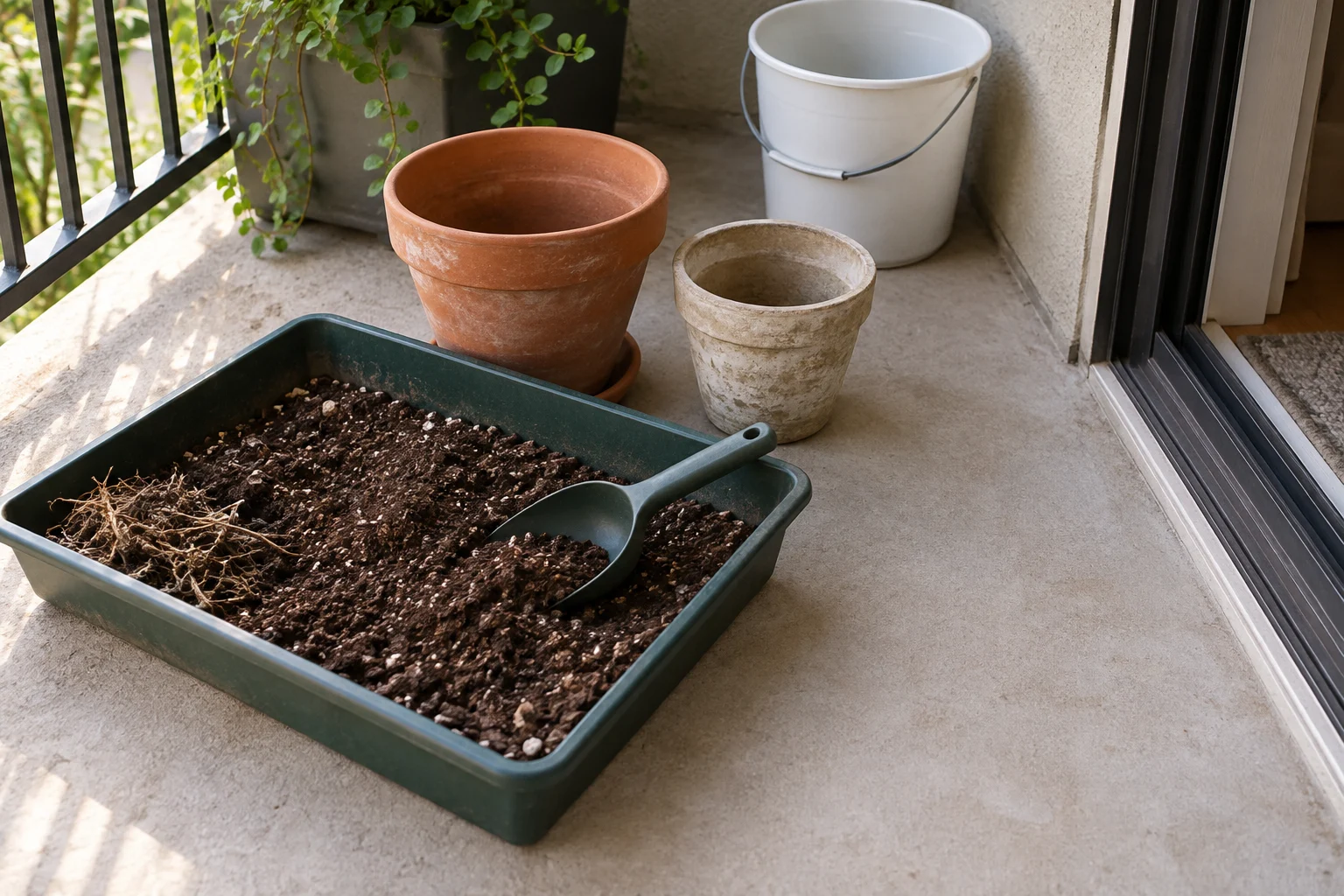
Remove the finished plant and shake reusable mix from its roots. Pick out remaining large root pieces, plant debris, and old plant tags. Maryland Extension’s reuse guidance calls for removing plant residues before storing the medium. Keep the contents of any questionable pot separate. You don’t need to buy a screen or empty every container onto a tarp to complete this job.
If you’re planting immediately, refresh only the amount those pots need, following the suitable refresh and feeding guidance you’ve chosen. Gradually moisten dry mix before filling the pots, particularly if it contains peat, and stir to distribute the moisture. Fill loosely rather than packing it down. These steps follow Maryland Extension’s container-planting guidance. Fill the intended pots as you go, keeping surplus separate from the material you plan to use.
For later use, University of Maryland Extension’s storage advice supports keeping suitable used mix dry in a sealed container. Label it with its origin and intended use, particularly if you have several batches. Choose storage that fits your available space and protects the material from rain.
Keeping mix in an outdoor pot is a separate decision from storing it in a sealed container. Check whether that pot can remain outdoors through your local winter and how it should be drained or protected. Penn State Extension recommends storing pottery and terracotta containers to avoid breakage in freezing temperatures and stresses drainage for outdoor plastic or metal pots. Follow your container’s instructions; established plants also have their own winter requirements.
You’re finished when the mix you’re keeping fits its storage spot and the remainder has an agreed destination. Reusing a smaller amount is worthwhile if that is what your next pots need. Choose those pots before buying amendments or refreshing the whole balcony’s supply.