
In this guide
You can fit a few pots beside the balcony chair. A row of large vegetable containers would take over the space. Advice to keep buying bigger pots leaves you wondering whether you can grow anything to eat here.
Start by considering leaf lettuce and a few culinary herbs. A genuinely compact fruiting variety may also work, but it needs a closer check. Let the containers and growing conditions narrow your choices, then decide what kind of harvest you would use. A few leaves for sandwiches or herbs for dinner can be enough to make the planting worthwhile.
Find out what your pots can accommodate
Set a pot and its saucer on the balcony floor where you intend to keep them. Open the door, pull out the chair and walk past. Leave room to reach the mix and collect drainage. Picture leaves extending beyond the rim, too; a pot that fits between your feet may hold a plant that soon fills the passage.
Check the container’s stated capacity and measure its usable growing depth. Leave watering space below the rim rather than counting the full outside height as soil depth. Two pots of similar diameter can have different depths and capacities, particularly when one tapers sharply toward its base.
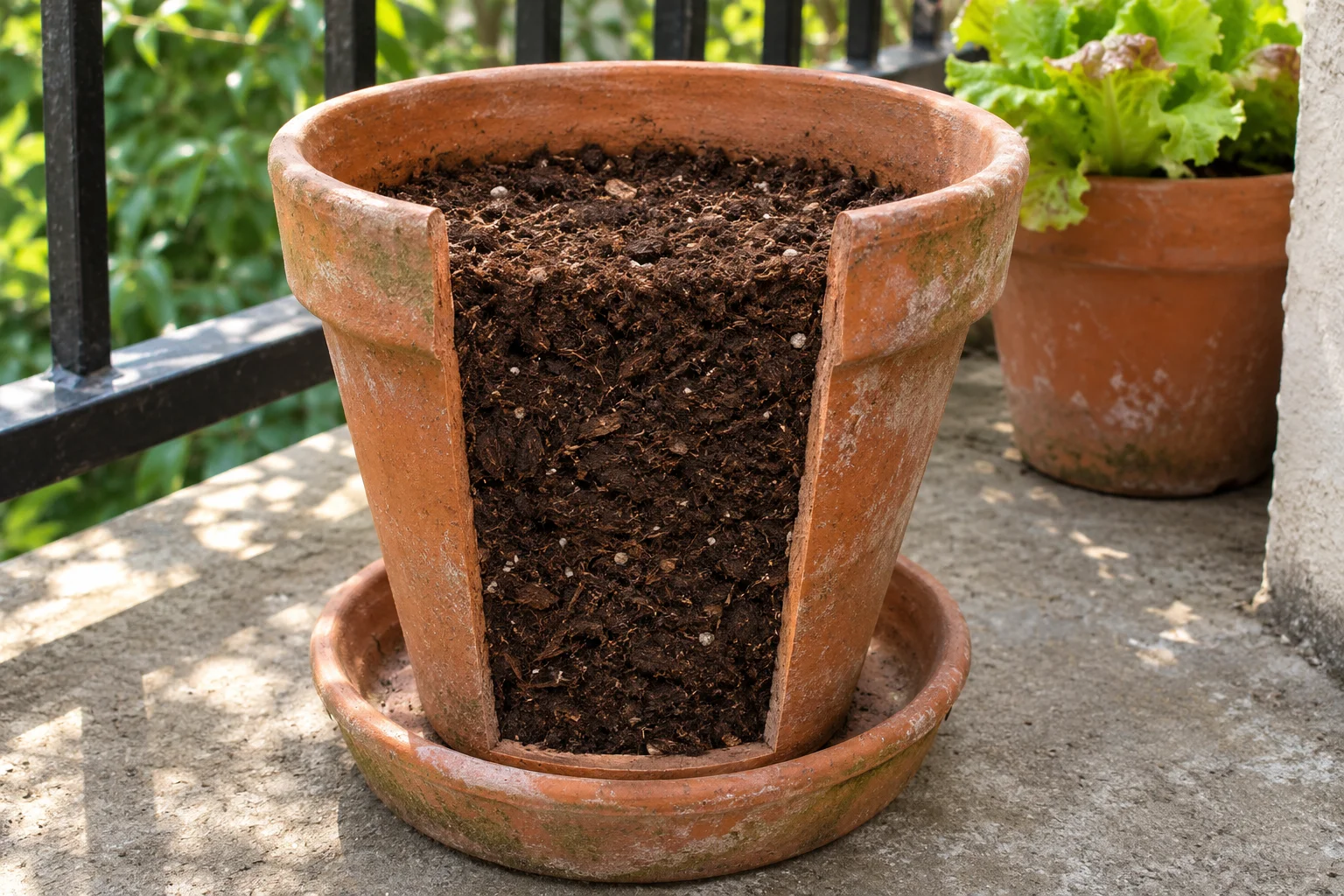
For a starting reference, NC State Extension gives 6 to 8 inches of potting-mix depth for lettuce. That is a depth check, not permission to fill any narrow pot with as many plants as it will hold. Surface area, spacing and the intended crop still matter.
Look for growing instructions that describe the particular plant and container. A photo of seedlings in a tiny pot shows where they started; it may not show where they can finish. If a seed packet or nursery recommendation leaves the final container unclear, ask before committing the space.
Use a container with drainage holes and suitable potting mix. Don’t sacrifice root space to a layer of stones: NC State explains that gravel beneath the mix does not improve drainage. You still need a way to catch and remove excess water without sending it onto the balcony below.
Match the growing position to the crop and season
Check direct sun where the leaves will sit, including shadows from a solid railing or the balcony above. Think about the position through the season you intend to grow there. Our balcony sunlight guide explains how to observe those positions.
University of Maryland Extension gives 3 to 5 hours of direct sun as guidance for cool-season crops such as lettuce, and 6 to 8 hours for warm-season fruiting crops such as tomatoes and peppers. These are useful screening ranges, not harvest guarantees. A bright-looking balcony with little direct sun should not automatically be assigned a tomato.
Temperature can change the choice even when there is enough light. University of Minnesota Extension explains that hot conditions can cause lettuce to bolt and become bitter. A sunny pot that suits a cool-weather lettuce planting may be a poor place for it in midsummer.
Use local Extension planting guidance to choose the season. A spring or fall recommendation from a northern state is not a planting calendar for every US balcony. If the pot’s only usable position is exposed to hot afternoon sun, changing the planting season may be more practical than trying to move it around every day.
Compare a few edible choices for the space you have
Choose something you will use, with a harvest that fits the planting. The following options answer different needs; they are not interchangeable occupants for every small container.
Leaf lettuce for picking a few leaves
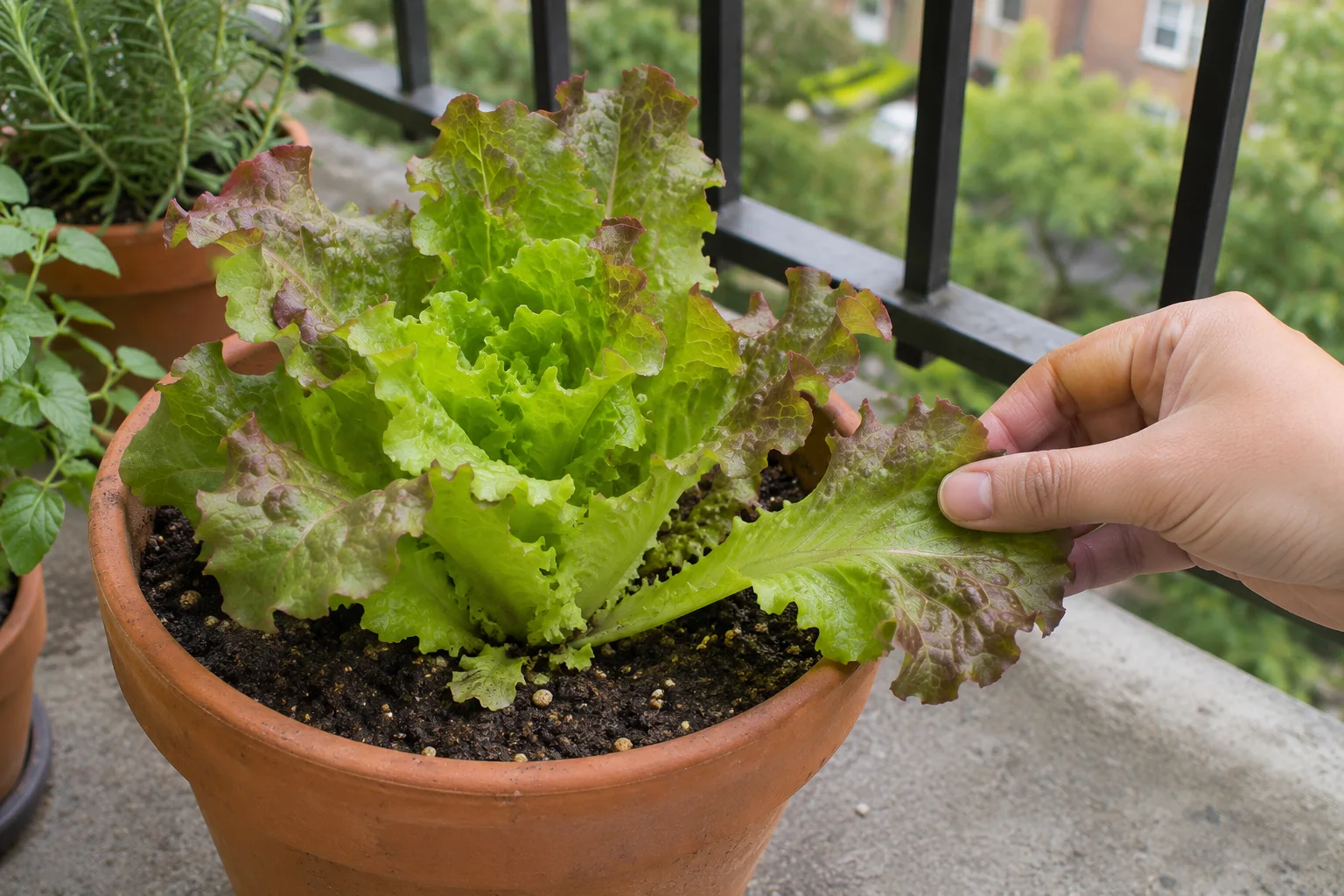
Leaf lettuce is a useful candidate when you want small pickings rather than full heads. Minnesota Extension distinguishes the space needed for baby-leaf harvests from that needed for full-size plants: its general garden guidance gives 5-inch spacing for baby-leaf picking and 10 to 12 inches for full-size leaf lettuce. These are starting references for the harvest you want, rather than a tested planting plan for your particular pot. It also describes taking individual usable leaves while leaving most of the smaller leaves to continue growing.
Decide which harvest you want before sowing. Check the planter’s depth, follow the appropriate spacing and thin seedlings rather than keeping every sprout. Plan for pickings from that small planting; don’t count on a bowl of salad every evening. See Minnesota’s lettuce guidance for the harvest and spacing details.
Small-leaf harvesting does not solve unsuitable heat or inadequate root space. If the plants bolt or the season no longer suits them, the planting has reached a stopping point.
A culinary herb you actually cook with
A herb pot can be useful when you want a garnish or a few sprigs. Start with one herb you regularly use, rather than buying a mixed collection because all the nursery pots fit together.
Illinois Extension lists thyme and chives among container-suitable herbs and advises selecting small, slow-growing plants. They are possibilities to investigate, not a promise that either can remain indefinitely in its original nursery pot. Check the mature plant and its care requirements before choosing its home.
Be particularly cautious with a tiny basil start. In its container-herb guidance, Illinois Extension warns that basil quickly outgrows a 3-inch pot. Check the final container’s depth and capacity against the variety’s growth rather than treating its nursery pot as a summer home.
Let the plant establish before taking much from it, and leave growth to support recovery between pickings. A small herb pot for occasional cooking should not be expected to provide enough foliage for repeated large batches of pesto.
A compact tomato, only when the variety and position fit
If you want fruit, investigate the named variety before assuming that “cherry tomato” means a small plant. Small fruit and small mature growth are different features. Illinois Extension’s tomato guide distinguishes fruit types from determinate and indeterminate growth habits; indeterminate plants continue growing through the season.
Look for a stated mature height and spread, along with a final-container recommendation for the named variety. If the description only says “patio” or “compact,” ask the nursery or seed supplier for those details. A recommendation that gives only a pot’s diameter still leaves its usable depth and capacity to check.
You still need suitable sun and temperatures, room around the mature growth, and a watering routine you can maintain. If those checks do not work, leave the tomato out of this planting.
Check whether you can keep that planting watered
A pot’s small footprint is helpful only while its care remains manageable. NC State notes that larger containers dry more slowly and need less frequent watering. A smaller pot therefore deserves careful attention in an exposed position, especially as the plant grows.
Check moisture rather than following a fixed daily watering instruction. Maryland Extension’s container-care guidance explains that water needs vary with the plant, container, growing-medium volume and exposure. Check below the surface and learn how the particular pot behaves as conditions change.
Before adding several plants, walk through a watering round. Reach the mix, check that you can pour steadily, then make sure you can remove the saucer afterward. If that means moving the chair each time, reconsider the position. If the tap is indoors, our guide to watering without an outdoor tap can help you assess the carrying route and runoff.
If your chosen pot repeatedly needs attention while you are away, change the plan. Another crop, a different suitable position, or fewer containers may be a better fit. Adding more pots before solving that problem makes the routine harder to sustain.
Choose a first planting you can keep
Consider a narrow balcony with a floor-standing planter that has suitable depth and surface area for a small lettuce planting. In cool weather, with adequate observed sunlight and reachable watering, leaf picking may fit the reader’s needs. Trying to turn the same space into a full-head lettuce bed changes the spacing and harvest expectations.
On another balcony, the available spot receives hot afternoon sun and the gardener mainly wants fresh herbs for dinner. A herb matched to that exposure and a suitable container deserves investigation before a pot of lettuce. If the gardener instead wants tomatoes, the next check is a confirmed compact variety and its container requirements. The desire for fruit does not make the existing pot suitable.
These examples are ways to assess a planting, not tested layouts or promises of success. Choose one crop you want to use. Compare its requirements with one pot’s measurements and the light you have observed, then confirm you can tend it in that position. Leave the other corners open while you find out how that first planting fits your week.